
Small Memory Care Home or Large Community? How to Choose in Northwest Arkansas
I've been a nurse for more than 20 years, mostly in trauma centers, intensive care units and emergency departments. Some of my favorite patients were older adults who loved to tell me about their lives. I also watched too many of them spend long days in bed, in places without enough staff, while their families felt left out of their care. I still think about them.
If your mom or dad is living with dementia, you may be weighing two very different kinds of places: a large memory care community, or a small home with only a few residents. I'd like to walk you through how they differ, what the research actually says, and what I would ask if it were my own parent.

What's helpful to understand
A small residential memory care home looks after a few people in a regular house, usually with the same caregivers day after day and a quieter pace. A large community looks after many more people in a bigger building, often with more activities and amenities. Both can give good care. The right one depends on your parent: how they handle noise and change, how much hands-on help they need, and who will be there for them at 2 a.m.
Assisted living, memory care and nursing homes
People use these words as if they mean the same thing, and it's confusing. Not every assisted living community offers care designed for people with dementia.4
| Setting | Who it's for | What it usually offers |
|---|---|---|
| Assisted living | Older adults who need some help with daily tasks but are mostly independent | Meals, housekeeping, help with bathing, dressing and medications |
| Memory care | People living with Alzheimer's or another dementia | A secured home, caregivers trained in dementia care, a steady daily routine |
| Nursing home (skilled nursing) | People who need ongoing medical care from licensed nurses | Nursing care around the clock, rehab, complex medical needs |
In Arkansas, memory care is usually provided in assisted living settings. State rules require at least one staff member for every 15 residents during the day and one for every 25 overnight, with never fewer than two people on duty.5 When you visit a place, ask how its staffing compares.
Small homes and large communities, side by side
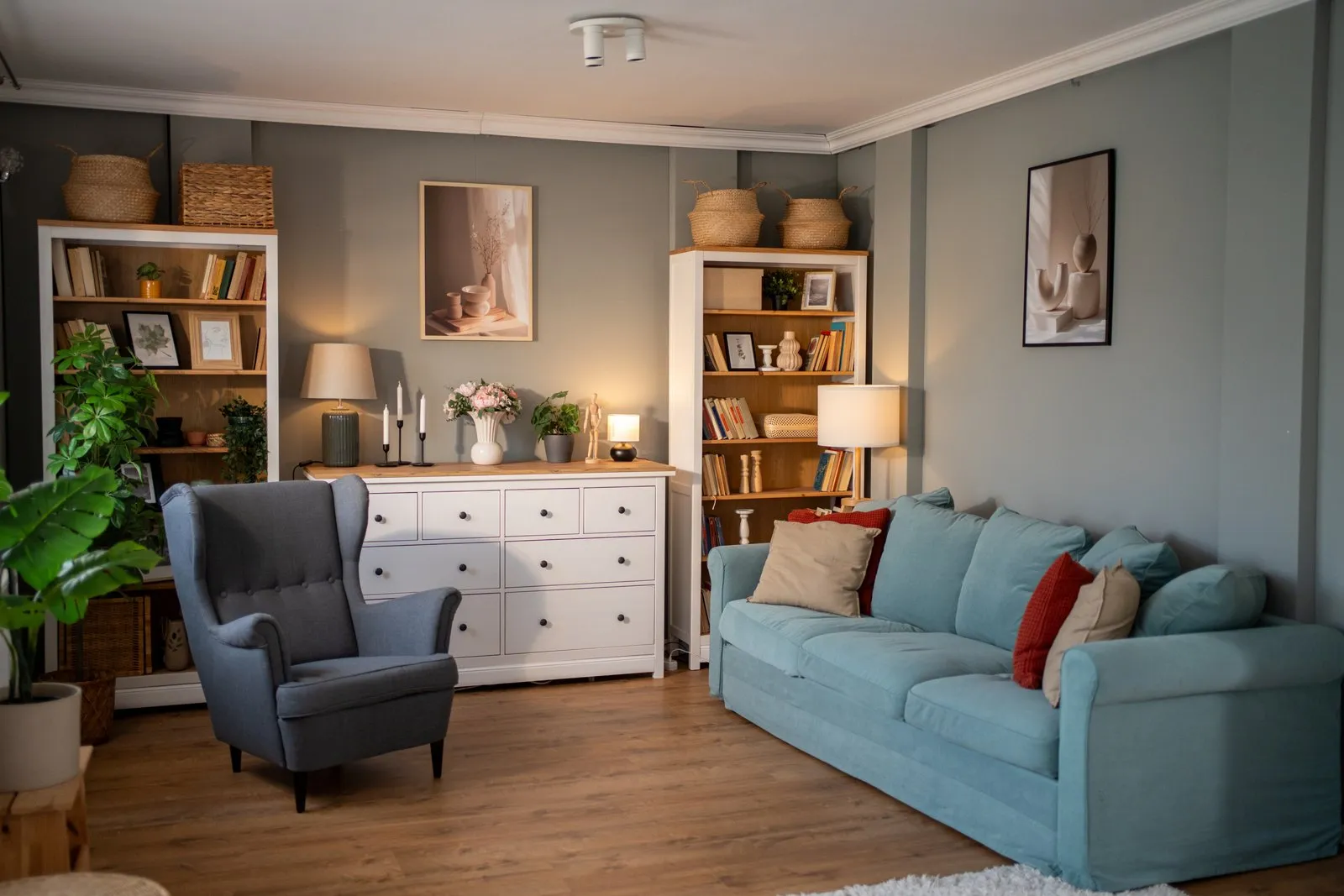
| Topic | Small residential home | Large community |
|---|---|---|
| Size | A handful of residents, often fewer than 20 | Often several dozen residents or more |
| Setting | A house in a neighborhood | A wing or building on a larger campus |
| Caregivers | The same small team, who come to know each person well | A larger team, with more shifts and more new faces |
| Daily life | Quieter days, meals around a family table | More scheduled programs and amenities |
| Often suits | People who feel overwhelmed by noise, crowds or change | People who love a busy social calendar |
| Good to ask | Who covers when a caregiver is sick? Who's there at night? | How many residents does each caregiver look after on each shift? |
When a small home may suit your parent
- They get anxious or upset in crowded, noisy rooms.
- They do better with the same faces and a steady routine.
- You'd like to know every caregiver by name.
When a larger community may suit them better
- They're social and love a full calendar.
- They may soon need services a bigger campus has on site, like rehab or skilled nursing.
What the research says about small, homelike care
Researchers in the Netherlands and the United States have studied small, homelike settings for people with dementia for years. Some of what they found is encouraging. I think it's just as important to be honest about what they didn't find.
What the studies found
- In a Dutch study of 259 residents, families whose loved ones lived in small homes felt less burdened and were more satisfied with the nursing staff than families with loved ones on traditional wards.1
- A later study of the same homes found residents in the small homes were given significantly fewer physical restraints and psychotropic medications, and took part more in daily life.2
- In U.S. Green House homes, caregivers spent about 4.2 hours a day with each resident, compared with about 2.2 hours in traditional nursing homes. Residents there were also readmitted to the hospital within 30 days 31% less often.3
What they didn't find
The same researchers found no overall difference in residents' quality of life, and most quality measures in Green House homes stayed about the same.1, 3 Being small doesn't make a home better on its own. What matters is who is caring for your parent, how well they've been trained, and whether you're welcome and included.
These studies also looked at small nursing homes, not assisted living homes like ours, so I'd treat them as a helpful guide rather than a promise.
Questions families ask about small homes
Who covers when a caregiver is sick?
It's a fair question. Ask how they fill a shift when someone calls in sick, and whether the person who steps in knows dementia care.
What happens at night?
Nights can be the hardest part of dementia. It's often when confusion, wandering and falls happen. Ask how many people are awake and working overnight, and how quickly a nurse can be reached.
Will my parent get along with only a few other people?
In a small home, the mix of people matters. Ask how they get to know your parent's history, habits and likes before move-in, and how they help someone settle in those first few weeks.
Will we have to move again?
No one wants to move a parent twice. Ask what happens as needs change, whether they work with hospice, and what kind of care would mean a move.
Questions to ask on any tour
The Alzheimer's Association suggests asking these questions wherever you visit:4
- Are staff trained in dementia care, and is that training required by the state?
- How many residents does each staff member look after on each shift?
- Is there a registered nurse on site at all times? If not, how quickly can one be reached?
- How long have the caregivers worked here?
- How do you handle changes in behavior or health?
- When would a resident be asked to move out?
They also suggest visiting at different times of day, including once without calling ahead.4 Our free memory care checklist can help you keep track of what you see and hear.
How we do things at Homes for Halos
We built Homes for Halos in Springdale as a real home for up to 14 people, because I believe everyone deserves to be known by name.
During the day, there's one caregiver for every six residents. Overnight, two team members are on duty, and a registered nurse is always on call. Our caregivers are trained in Teepa Snow's Positive Approach to Care, which is about meeting each person where they are. You can read more about our memory care.
We'll keep you involved in your parent's care plan as their needs change, and you can check in from home through the camera in their room. We charge one monthly rate, starting at $7,500, so the price doesn't go up each time your parent needs a little more help. You can see what's included.
We open in December 2026, and hard hat tours begin December 1. If you'd like to see the house, or just talk things through, call us at (479) 551-4647 or schedule a tour. You're also welcome to meet our team or read about how admissions works.
Sources
- [1] Verbeek H, Zwakhalen SMG, van Rossum E, Ambergen T, Kempen GIJM, Hamers JPH.
"Dementia Care Redesigned: Effects of Small-Scale Living Facilities on Residents, Their Family Caregivers, and Staff."
Journal of the American Medical Directors Association, 2010.
https://doi.org/10.1016/j.jamda.2010.08.001.
Accessed November 11, 2026. - [2] Verbeek H, et al.
"Effects of Small-Scale, Home-Like Facilities in Dementia Care on Residents' Behavior, and Use of Physical Restraints and Psychotropic Drugs: A Quasi-Experimental Study."
International Psychogeriatrics, 2014;26(4):657–668.
https://doi.org/10.1017/S1041610213002512.
Accessed November 11, 2026. - [3] Zimmerman S, Bowers BJ, Cohen LW, Grabowski DC, Horn SD, Kemper P, et al.
"New Evidence on the Green House Model of Nursing Home Care: Synthesis of Findings and Implications for Policy, Practice, and Research."
Health Services Research, 2016;51(Suppl 1):475–496.
https://pmc.ncbi.nlm.nih.gov/articles/PMC5338207.
Accessed November 11, 2026. - [4] Alzheimer's Association.
"Choosing a Residential Care Community."
Tip sheet, July 2024.
https://alz.org/getmedia/2f238875-3f5d-447e-adcc-dd9fc07f828b/alzheimers-dementia-choosing-residential-care-ts.pdf.
Accessed November 11, 2026. - [5] Arkansas Department of Human Services, Office of Long Term Care.
"Rules for Assisted Living Facilities Level II."
Revised January 1, 2024.
https://humanservices.arkansas.gov/wp-content/uploads/Assisted-Living-Facilities-Level-2.pdf.
Accessed November 11, 2026.
Questions about memory care? We're here to talk.